Many small businesses make the mistake of putting very little information on their website and simply telling visitors, “Check out our Facebook page for more details.” While Facebook is a useful marketing tool, it should support your website—not replace it.
Here’s why your website should be the primary source of information.
1. Your Website Builds Trust
When customers visit your website, they expect to find answers quickly. If all they see is a link to Facebook, it can make your business appear unfinished or less professional.
A complete website should include:
- Business hours
- Contact information
- Directions
- Services or products
- Pricing (when appropriate)
- Frequently asked questions
- Customer reviews
- About your business
The more helpful your website is, the more confidence customers have in your business.
2. Not Everyone Uses Facebook
Many potential customers:
- Don’t have a Facebook account.
- Have deleted Facebook.
- Prefer not to use social media.
- Are browsing from work where Facebook may be blocked.
If your important information is only on Facebook, you’re creating an unnecessary barrier for potential customers.
3. Better Google Rankings
Google can easily read the content on your website, helping it understand:
- What your business does
- Where you’re located
- Which services you offer
- What searches you should appear in
If all your information lives on Facebook instead of your own website, you’re giving Google less content to index, making it harder for people to discover your business through search engines.
4. Faster Customer Experience
Imagine someone wants to know:
- What time do you close?
- Do you offer a specific service?
- Are you open today?
- How do they contact you?
If they have to:
- Visit your website,
- Click Facebook,
- Wait for Facebook to load,
- Search through posts,
many will simply leave and look elsewhere.
Customers appreciate getting answers in just a few clicks.
5. You Control Your Website
Facebook can:
- Change its layout.
- Hide your posts.
- Experience outages.
- Suspend or restrict pages.
- Limit who sees your updates.
Your website is your own digital property. You decide what visitors see and how it’s presented.
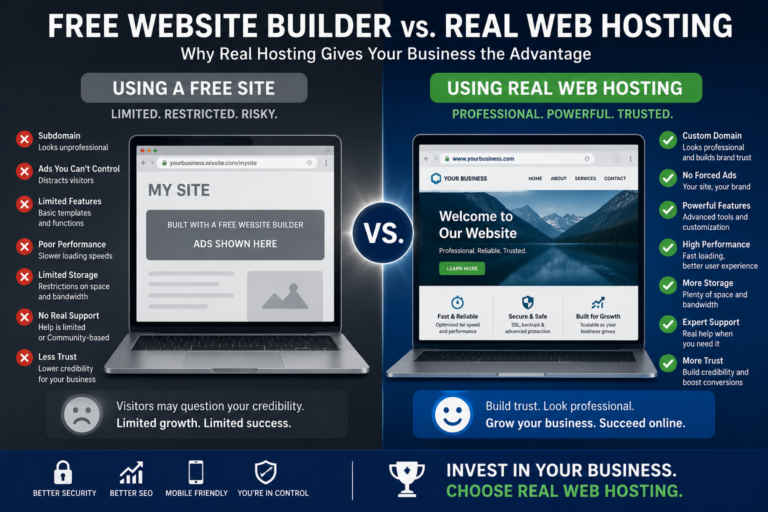
6. A Website Looks More Professional
Think of your website as your digital storefront.
A professional website tells customers:
- You’re established.
- You take your business seriously.
- You care about customer experience.
- You’re easy to do business with.
Your Facebook page should complement your website—not replace it.
7. Customers Find Information Faster
Instead of scrolling through months of Facebook posts, visitors should be able to find:
- Hours
- Phone number
- Services
- Events
- Policies
- Contact forms
within seconds.
A well-organized website saves customers time and reduces frustration.
8. Your Website Works 24/7
Even when you’re closed, your website can:
- Answer common questions.
- Showcase your products or services.
- Collect contact form submissions.
- Display directions and maps.
- Encourage customers to visit or call.
It’s like having an employee available around the clock.
9. Social Media Should Support Your Website
The ideal strategy is:
- Website: Your permanent home for business information.
- Facebook: Share updates, photos, events, and engage with your community.
- Google Business Profile: Help customers find you in local searches.
- Other social media: Drive traffic back to your website.
Your website should be the destination, while social media serves as a way to attract visitors.
The Bottom Line
Facebook is an excellent tool for connecting with customers, but it shouldn’t be the only place where your business information lives. A well-maintained website gives visitors the answers they need, builds trust, improves your visibility in search engines, and presents a more professional image.
Think of your website as your business headquarters and your Facebook page as one of many ways to invite people through the front door.