
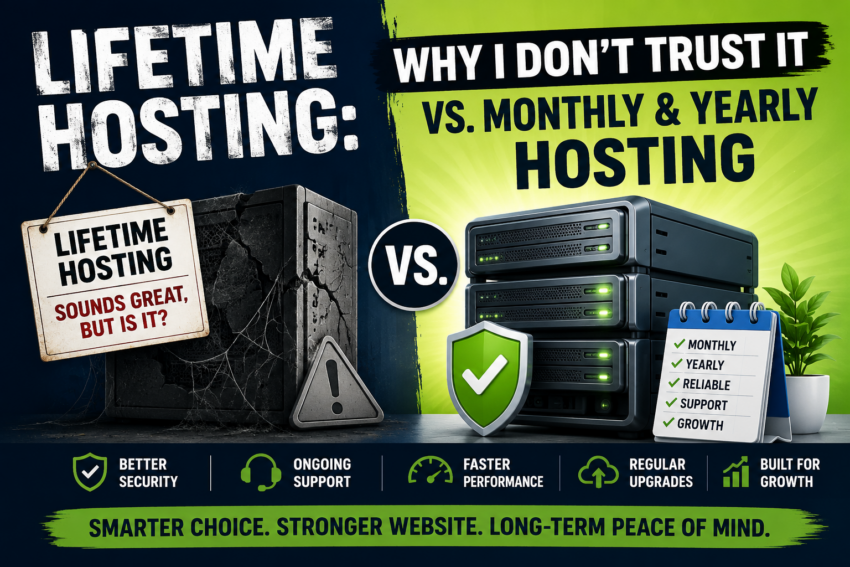
Lifetime web hosting can sound like an amazing deal—pay once and never pay again—but there are several reasons many businesses and developers are skeptical of it.
1. The company may not last forever
A hosting company might advertise “lifetime” hosting, but businesses can:
- Go out of business.
- Be sold to another company.
- Change their terms of service.
- End the lifetime plan altogether (sometimes with little notice).
Your website could end up needing to be moved unexpectedly.
2. “Lifetime” usually means the company’s lifetime
Most lifetime hosting plans define “lifetime” as:
- The lifetime of the hosting company.
- The lifetime of that specific hosting product.
It rarely means your lifetime.
3. Limited resources
Lifetime plans often come with restrictions such as:
- Lower CPU limits.
- Limited memory.
- Smaller storage.
- Bandwidth caps.
- Fewer databases or email accounts.
As your website grows, you may be forced to upgrade anyway.
4. Less incentive to support you
With monthly or yearly hosting, the company earns recurring revenue, giving them a reason to:
- Keep servers updated.
- Improve performance.
- Offer quality customer support.
- Invest in security.
With a one-time payment, they don’t receive ongoing income from you, so support and upgrades may suffer over time.
5. Technology changes
Web hosting isn’t static. Servers need:
- New hardware.
- Security patches.
- Faster SSD or NVMe storage.
- Updated PHP versions.
- Better networking.
These upgrades cost money year after year.
6. Hidden fees
Some lifetime plans charge extra for things like:
- SSL certificates.
- Email hosting.
- Backups.
- Domain renewals.
- Website migrations.
- Priority support.
The “lifetime” hosting may not be as inexpensive as it first appears.
7. Performance may decline
If a provider sells too many lifetime accounts, they may overcrowd their servers to stay profitable, resulting in:
- Slow websites.
- Longer downtime.
- Poor response times.
Why monthly or yearly hosting is often the safer choice
Monthly or annual hosting typically offers:
- ✔ Predictable support.
- ✔ Regular server upgrades.
- ✔ Better security.
- ✔ More reliable uptime.
- ✔ Easier upgrades as your website grows.
- ✔ The flexibility to switch providers if service declines.
Bottom line
For a hobby website or personal project, a reputable lifetime hosting plan might be acceptable if you understand the risks.
For a business website, e-commerce store, or any site that generates leads or income, paying monthly or yearly with a well-established hosting provider is generally the more reliable investment. The recurring revenue model helps ensure the host can continue maintaining infrastructure, improving security, and providing customer support over the long term.
